
The 40th Issue of “Mai Mai” Pathology Weekly Reading Notes | Immunohistochemical Markers for Aiding Diagnosis of Dysplasia and Malignant Transformation

Introduction:
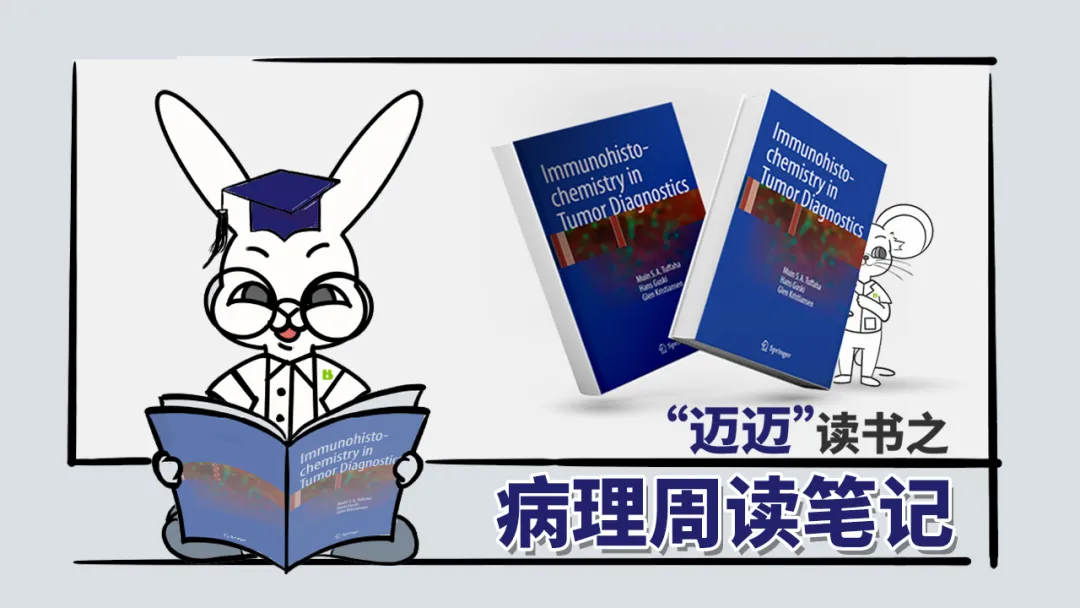
Immunohistochemical Markers for Assisting in the Diagnosis of Dysplasia and Malignant Transformation
Detailed Explanation of Some Markers
01
Ki-67
02
p53
03
IMP3
04
GLUT-1
05
BAP-1
06
CEA
07
CD24
08
p16
-
First and foremost, remember that careful morphological evaluation combined with clinical information remains the foundation of pathological diagnosis; the purpose of immunohistochemical testing is to support or rule out possible diagnoses;
-
The work of an immunohistochemistry laboratory includes several aspects: well-trained pathologists; highly specialized testing methods and immunohistochemistry techniques; staff must understand morphology and be able to accurately interpret immunohistochemical staining results;
-
Single-marker immunohistochemical testing is the most common cause of errors in tumor diagnosis immunohistochemistry. No single marker result can be entirely relied upon! Necessary marker combinations help avoid misdiagnosis; and when confirming or ruling out a diagnosis, always select two or more markers;
-
Understanding the nature of the antigen to be detected is crucial for result interpretation. Specifically, consider the following questions:
1) Antigen expression pattern: nuclear, cytoplasmic, membranous, extracellular?
2) Stability of the antigen during tissue processing: standardized specimen fixation and processing, as well as good section quality, are critical for immunohistochemistry results;
3) Tumors are composed of various cell types, and even within the tumor component, there is genetic and phenotypic heterogeneity. Atypical antigen expression patterns may be due to tumor biological heterogeneity or issues with the antigen used.
-
The properties of new antibodies must be carefully studied. Specifically, consider the following questions:
1) Antibody type: polyclonal or monoclonal? If monoclonal, note the clone number;
2) Sensitivity and specificity, recommended dilution ratio;
3) Be particularly cautious when using newly developed antibodies. New antibodies generally have strong specificity initially, but specificity often decreases after a period of use or upon validation with tissue microarrays;
4) Sensitivity and specificity of the detection system used.
-
Standardization of immunohistochemistry methods is an important part of accurate result interpretation; positive and negative controls are meaningful for result interpretation;
-
Interpretation and reporting of immunohistochemistry results must also be standardized. Simply judging staining results as positive or negative is insufficient; staining quality, intensity, and pattern should also be considered and recorded, and conflicting results must be analyzed and explained. Standardized reporting is very helpful for accurate diagnosis;
-
Although immunohistochemistry has high sensitivity and a large number of antibodies available, this method also has its own limitations. Do not force a diagnosis based on ambiguous or non-specific results. Some cases must be confirmed by other methods.
Maimai Recommends: “A correct choice is worth more than a hundred times the effort of a wrong one! This issue, Maimai recommends the following products for you!””
|
Antibody Name |
Clone Number |
Positive Control |
Cellular Localization |
|
CEA* |
MX068 |
Lung adenocarcinoma, appendix |
Cytoplasmic |
|
GLUT-1 |
SPM498 |
Placenta, colon adenocarcinoma |
Membranous |
|
IMP3 |
EP286 |
Pancreatic cancer, colon adenocarcinoma |
Membranous/Cytoplasmic |
|
Ki-67* |
MXR002 |
Tonsil, breast cancer |
Nuclear |
|
p16* |
MX007 |
Cervical squamous cell carcinoma, tonsil |
Nuclear/Cytoplasmic |
|
p53* |
MX008 |
Gastric cancer, ovarian serous carcinoma |
Nuclear |
For more information, please contact: 800-8581156 or 400-889-9853