
Industry News

Seize the Moment, Collaborate on Research—Suggestions for Advancing COVID-19 Studies


Introduction:


Colleagues following the research progress of COVID-19 must be aware that in the clinical studies of COVID-19, a series of papers on clinical manifestations have been completed through the collaboration of clinical physicians from numerous hospitals. This is because everyone knows that a small number of cases cannot reflect the essence and patterns of the disease; the larger the sample size, the more it can reveal the true nature of the disease.

Similarly, in pathological research, the pathological manifestations and lesion patterns of many diseasesalso require observation, study, and summarization of a large number of cases to draw reliable conclusions.COVID-19 is now widely prevalent and is no longer a rare disease. Relying solely on the observation of individual cases can only provide a limited view, like looking at a leopard through a tube.Large-scale pathological studies of cases are imperative.
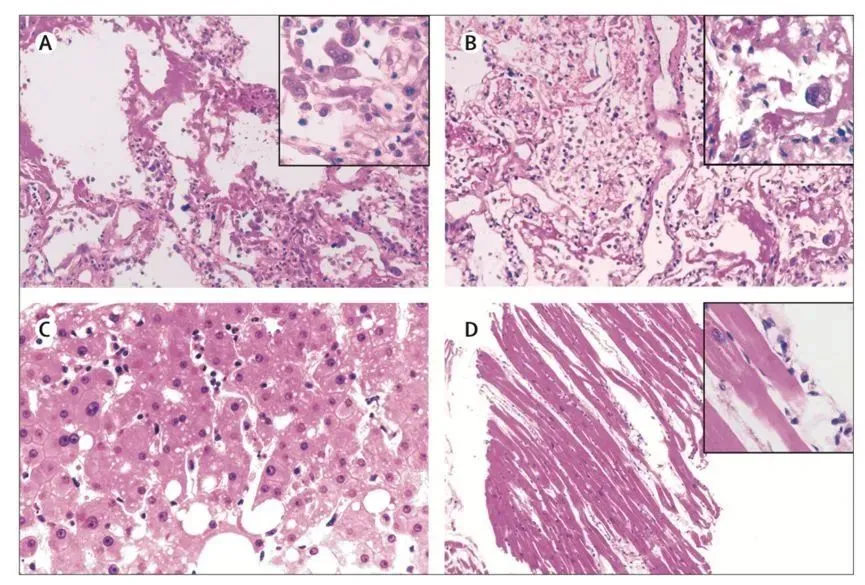


▲ Image of lung pathological manifestations in severe COVID-19 cases published in The Lancet


Unfortunately, there is very little pathological data on COVID-19. The most important issue at present is to actively strive for and collect case data, the more the better. As the number of deaths decreases, opportunities for autopsies will become increasingly scarce. Time waits for no one, and opportunities must not be missed. Pathologists should have a sense of urgency.
Regarding pathological research on COVID-19, the primary issue is the scarcity of autopsy data. Although some leading pathologists have made efforts and obtained approval from the National Health Commission, the set thresholds are too high, such as conditions of the dissection room, consent from the deceased’s family, protection requirements, and clinical cooperation, making implementation difficult. So far, only a dozen or so autopsies have been conducted. Compared to the nearly 3,000 deaths to date, this is far too few. A leading expert in Beijing believes that at least 10% of death cases should undergo autopsy to more comprehensively and accurately reflect the pathological manifestations of the disease. The author fully agrees.
In terms of biopsies, in the early stages of the epidemic in Wuhan and other places, some patients underwent surgery for tumors such as lung cancer and colon cancer before both doctors and patients were aware of COVID-19 infection. It was only after surgery, when symptoms like fever appeared, that the patients were discovered to be infected with the novel coronavirus, fortunately leaving behind some biopsy specimens of early infection. If we trace back to biopsy specimens from the initial phase of the epidemic, we might still find some for retrospective studies. Existing patient samples such as sputum, pleural effusion, and bronchoalveolar lavage fluid also have diagnostic and research value.
Between autopsies and biopsies lies postmortem needle biopsy. Its operational difficulty and the challenge of obtaining consent from the deceased’s family should be much lower than those of systematic autopsies. Unfortunately, there are also very few specimens in this regard; currently, only a few cases are known. The world’s first pathological report was based on a postmortem biopsy. While there is still an opportunity, pathologists with the conditions should seize it.
Everyone knows that articles on COVID-19 are currently the easiest to publish, and getting an SCI paper is not a problem. It is reported that several case reports have already been accepted by foreign journals, and preprints have also been released. A few Chinese preprints have been seen as well. As COVID-19 spreads widely globally and death cases increase abroad, pathological research will soon catch up, just as it did with SARS research back then. Pathological research on COVID-19, which first broke out in China, may also be surpassed by foreign countries. This situation of “flowers blooming inside the wall but reddening outside” is something I believe no one is happy to see.
However, working independently and relying solely on case reports, especially descriptive research reports, still seems relatively rudimentary. Large-scale case studies require pathologists to collaborate closely, divide labor, and conduct research from multiple levels and perspectives, leveraging their respective strengths. Research content can refer to previous works on SARS and MERS, as well as the author’s suggestions on autopsy studies. Resource sharing, mutual benefit, each contributing their abilities, and each getting their due—there needs to be a leader to coordinate this effort. The radiology specialty is already thriving; pathologists, keep up the effort!

Author: Professor Liu Dechun

发表回复

您的邮箱地址不会被公开。 必填项已用 * 标注