
Industry News

Focus on the Two Sessions: National Committee Member Bian Xiuwu Highlights Pathology’s Unique Role in Pandemic Response


Introduction:


Recently, Bian Xiuwu, a member of the National Committee of the Chinese People’s Political Consultative Conference (CPPCC), an academician of the Chinese Academy of Sciences, and the director of the Institute of Clinical Pathology of the People’s Liberation Army, led his team on the front lines of COVID-19 prevention and control. They successively completed pathological diagnoses and in-depth research on 40 deceased patients’ bodies, establishing the world’s first and largest COVID-19 pathological sample bank with the most comprehensive pathological data currently known. The related research findings have filled the gap in pathological content within the COVID-19 diagnosis and treatment guidelines, making significant contributions to winning the battle against the epidemic.At this year’s National Two Sessions, Academician Bian Xiuwu will actively offer suggestions and advice from the perspective of national biosecurity, focusing on the development and construction of pathology in China.
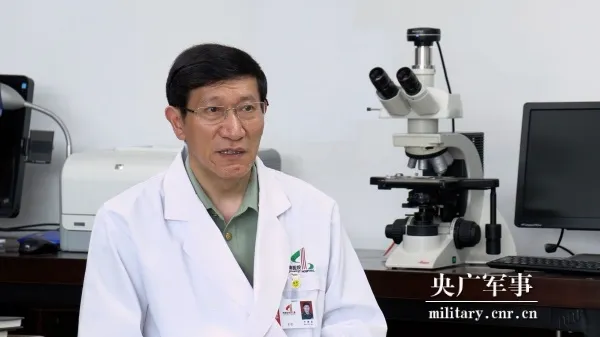


 Bian Xiuwu, Member of the National Committee of the CPPCC, Academician of the Chinese Academy of Sciences, and Director of the Institute of Clinical Pathology of the People’s Liberation Army


At this year’s National Two Sessions, Bian Xiuwu, a member of the National Committee of the CPPCC, an academician of the Chinese Academy of Sciences, and the head of the Pathology Department at the First Affiliated Hospital of the Army Medical University, based on his experience fighting the epidemic in Wuhan, brought forward proposals regarding improving legal provisions related to pathological anatomy in the Infectious Disease Prevention and Control Law and establishing a pathological sample bank for major epidemics.

Bian Xiuwu: “During this Two Sessions period, I would like to discuss the development of the pathology discipline within the national biosecurity strategy, specifically the collection, preservation, sharing, and utilization of pathological samples, especially those related to major epidemics, in a biosecure environment. Additionally, there is the issue of platform construction. For example, we should strengthen the certification of public safety institutions regarding how to require, manage, utilize, and layout biosafety-level autopsy platform facilities and pathological research laboratories. Furthermore, relevant laws and regulations need further improvement, including related clauses in the Infectious Disease Prevention and Control Law. These can be further refined and updated through this epidemic, ensuring that autopsies during major epidemics can proceed smoothly under legal protection.”
Pathology is the foundation of medicine. During the fight against the COVID-19 epidemic, Academician Bian Xiuwu led his team to successively complete pathological autopsies and in-depth research on 40 deceased patients, making outstanding contributions to helping frontline medical staff understand the pathogenic mechanisms, implement precise treatments, improve the success rate of treatment, and reduce the mortality rate.
Bian Xiuwu: “Through work in this field, all medical staff can obtain new insights. For example, is the virus only present in the lungs? How long can the virus persist? Does the disease cause fibrosis? When does fibrosis begin? We found that in the later stages, patients had severe pulmonary hemorrhage, while in the early stages, thrombosis formed, so medication must be carefully considered. Previously, we didn’t know these things; we could only speculate based on blood tests about coagulation levels and platelet counts. Does reality differ from speculation? Once these issues are revealed, medical staff understand the actual manifestations. Then, when treating specific patients, they have a clearer understanding.”
Academician Bian Xiuwu admitted that although pathology is very important and played a unique role in combating the epidemic, it has not received sufficient attention in the current development of medicine in China. At the National Two Sessions in 2018 and 2019, Academician Bian Xiuwu called for attention to the construction of weak but essential disciplines in the medical system. After the outbreak of COVID-19, the importance of pathology and the inadequacy of its foundational construction became even more apparent.
Bian Xiuwu: “When we were dispatched to Wuhan, we found the difficulties were greater than we imagined. First, from a policy perspective, since no policies were issued, progress was hard to push. Which institution would perform the autopsies? Could they be done? No hospital would mobilize for autopsies. Second, institutional qualifications and teams were not clearly defined; hospitals lacked autopsy rooms. Many people, including colleagues in Wuhan, had very few pathologists who could actually perform autopsies. Pathology itself is very important, but during a certain historical period or due to other factors, its role and status were somewhat neglected.”
Following appeals from Academician Bian Xiuwu and other researchers, and with active promotion by the Central Guidance Group, the National Health Commission coordinated multiple military and civilian departments to respond quickly. Supporting policies and measures were soon issued. The military medical team supporting Hubei took active action, setting up the country’s first negative-pressure biosafety autopsy mobile cabin at Huoshenshan Hospital, providing strong support for pathological autopsies in terms of both software and hardware.
Bian Xiuwu: “The entire pathology community across the country was very concerned and actively participated. Through this epidemic, the role of pathology was fully demonstrated. In the end, including gross and needle biopsies, we performed over 40 cases. Combined with autopsies of various sizes from other parts of the country, the total in my report is 91 cases, the highest number in the world. This is the largest number of autopsy pathological diagnoses in an epidemic in China’s history and the first time globally that a consensus on the pathological changes of this disease has been written. Through the pathological work during this epidemic, people have come to understand the important position of pathology in the new era and the areas where discipline construction urgently needs strengthening.”
The construction and development of pathology also depend on the understanding and support of the public. Before each pathological autopsy, Academician Bian Xiuwu’s team would pay tribute and observe a moment of silence for the deceased, thanking the people of Wuhan who donated their bodies to fight the epidemic. Bian Xiuwu said that in the next step, he hopes the country can further guide and standardize the process of citizen body donation, providing better legal and policy guarantees for humanity’s fight against epidemics.
Bian Xiuwu: “Under normal circumstances, through the Red Cross and connections with medical schools, there are still quite a few body donations each year. However, in terms of popularization and the promotion of its significance, it is far from enough. In emergencies, these issues become apparent. For a major epidemic related to biosecurity like this, the role played by the military system, as well as the management of sample collection, protection, and research information, should all be guaranteed by laws and corresponding national policies.”
Source of this article:CNR.cn

发表回复

您的邮箱地址不会被公开。 必填项已用 * 标注