
With the Right Chip Comes Mastery, the Motherland Cannot Save You Every Time

The ZTE sanctions incident by the United States, which began on April 16, has been fermenting online for some time. Just as the heat was gradually fading, the situation unexpectedly took a turn. On May 13, our famous Twitter President Trump posted the following message on Twitter:
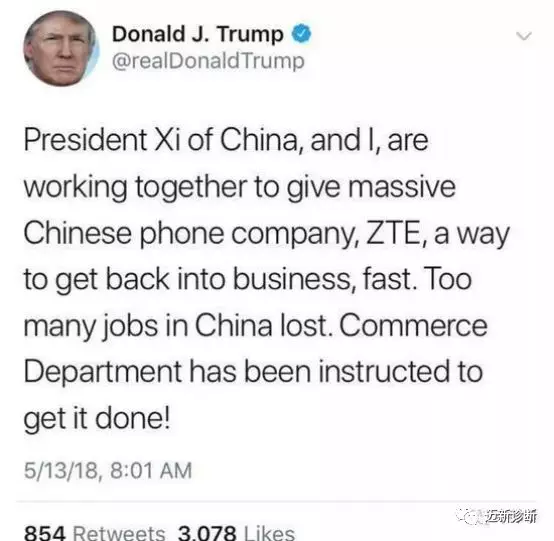
The general meaning is: I am working together with Chinese President Xi Jinping to provide ato quickly resume its business.pathway for the large Chinese telecommunications company ZTE. Because of this, too many jobs have been lost in China. The Commerce Department has been instructed to get it done as soon as possible.
This indeed appears to be good news. The shift in the U.S. government’s attitude means that ZTE’s dark moment is about to see light. From sanctions with no room for negotiation to assistance in rapid recovery, it is clear that our strong government has put in tremendous effort and hard work behind the scenes. However, the tactics of commercial diplomacy are ever-changing, and the policy landscape can shift in an instant. The lesson of being strangled and constrained this time must not be forgotten. This is something that, in my opinion, not only ZTE employees but all Chinese people have now clearly realized.
If Chinese enterprises want to calmly face various bans in the future, break free from constraints and shackles, they must become self-reliant and strong, accelerate the pace of transformation into technology-driven enterprises, and respond to the ever-changing international situation with unwavering technological research and development. Undoubtedly, the path of R&D is difficult and winding, with few shortcuts. But we are fortunate to have a strong nation as our backing. As long as all industries can align their goals, pool resources, and advance together, we will certainly create a Chinese ‘core’.
Similarly, as a Chinese national enterprise, Maxin deeply empathizes with the plight of ZTE and even the entire telecommunications industry. Although compared to the telecommunications industry, which is at the forefront of the storm, our pathology industry is currently thriving, with an expanding market and strong development momentum, and we see a bright future for the industry. However, the ZTE incident is like a stone thrown into a lake, breaking the original tranquility. Beneath the surface of prosperity, upon quiet reflection, the pathology in vitro diagnostics industry also suffers from the pain of missing core technology supply chains.That is, the localization rate of core raw materials such as enzyme substrates, antigens, and antibodies used in in vitro diagnostic reagents is extremely low, and the phenomenon of being constrained by others is still very evident.
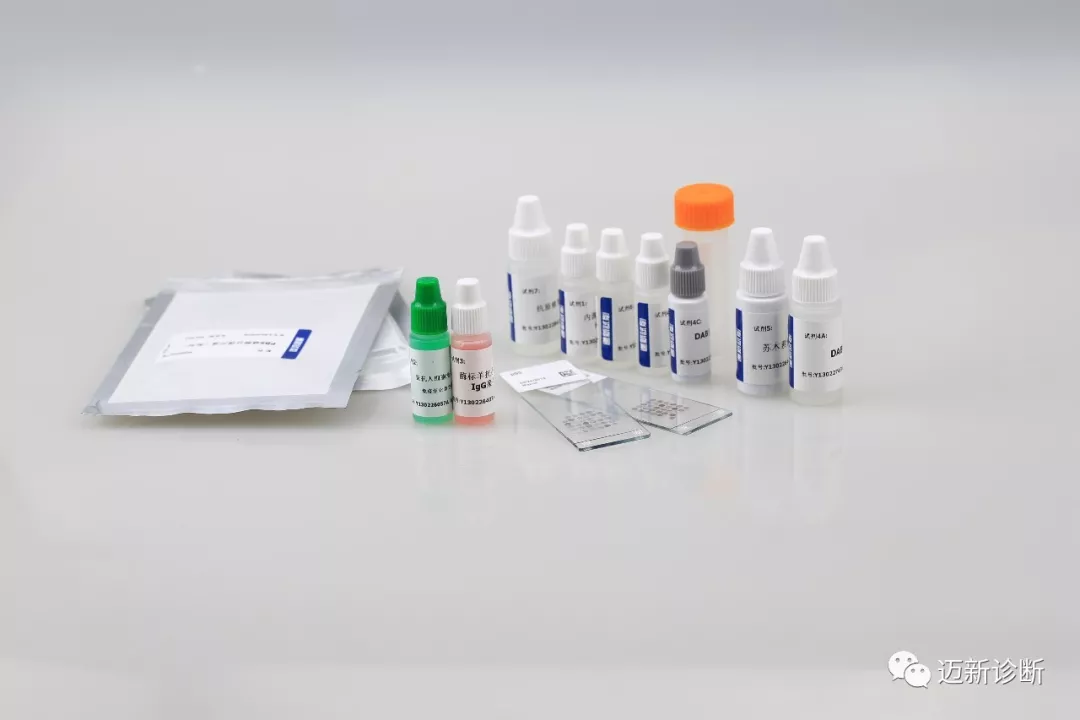
Taking Maxin’s core business as an example, immunohistochemistry technology plays an increasingly important role in the field of biology, especially in basic and clinical medical research, providing powerful means for the diagnosis, differential diagnosis, and research of tumor pathogenesis. The variety of antibodies has also grown from a dozen at the beginning of R&D to hundreds currently applied in various fields of clinical research. These antibodies play a crucial auxiliary role in diagnosing most difficult cases and are highly significant for patient prognosis and treatment guidance.
Currently, the technology for preparing monoclonal antibodies domestically is very mature. However, preparing monoclonal antibodies is only one important part of the monoclonal antibody R&D process; the selection of target antigens and the screening and identification of antibodies are the core components of monoclonal antibody development. Therefore, only through independent innovation and mastering the core technological links can we truly no longer be constrained by others.
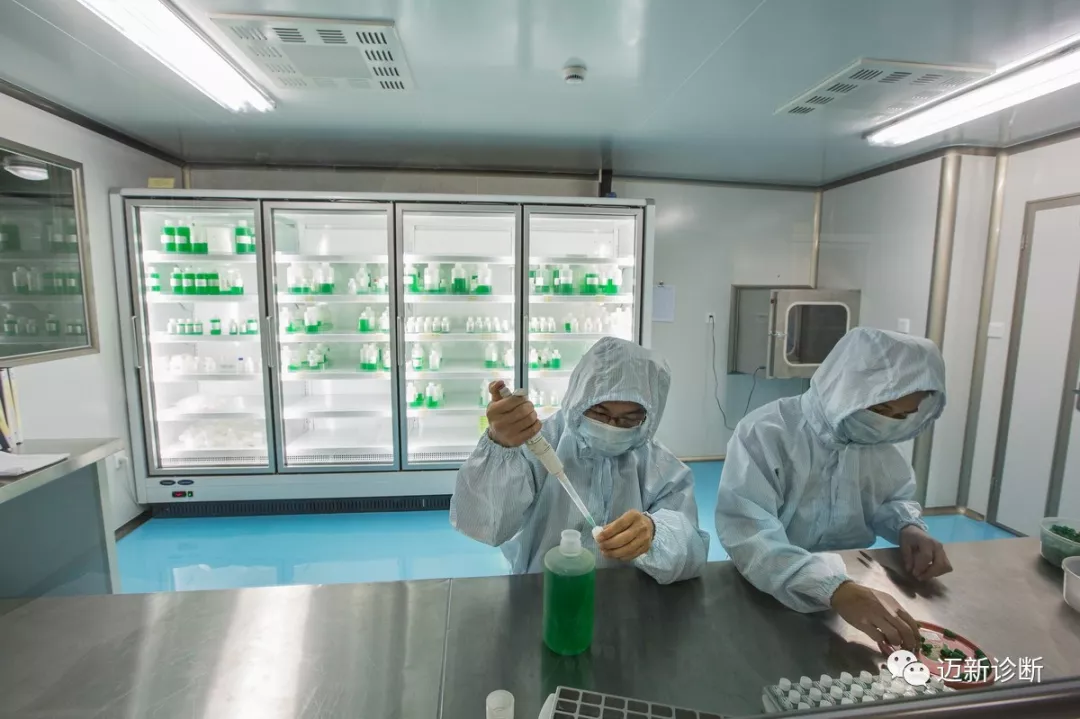
As a national enterprise dedicated to the pathology cause for 25 years, Maxin has regarded independent R&D as the primary driving force for development since its inception. We place great emphasis on attracting high-tech talent and investing in R&D projects, and have made certain breakthroughs in antibody development.
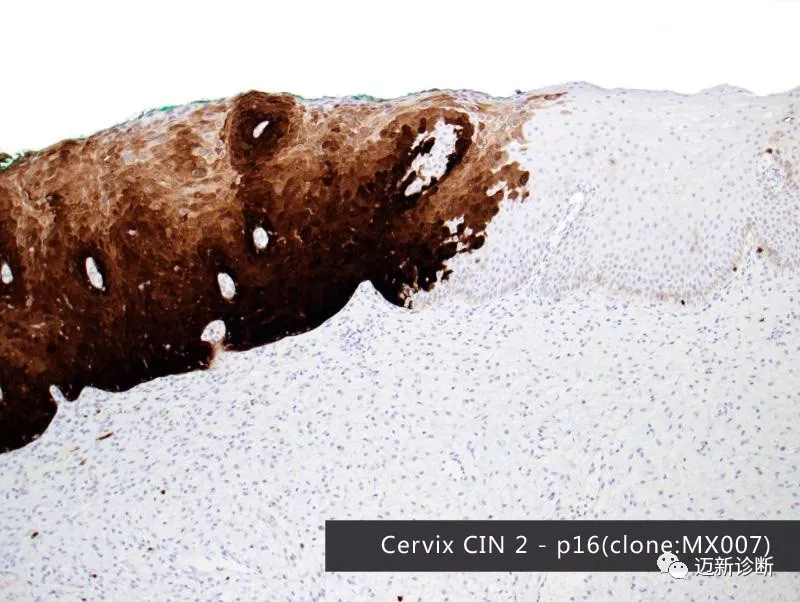
So far, Maxin has independently developed over 50 antibodies with performance reaching or even surpassing international advanced levels, such as Ki67, p16, TTF-1, p40, CD10, PAX-5, HP, PD-1, PD-L1, Her-2, and CD117.
Nevertheless, what we have done is far from sufficient to meet the needs of pathology departments. For the self-reliance and strength of pathology enterprises, to keep risks at bay, and to innovate and pioneer, the pace of independent R&D must be accelerated, and the craftsmanship spirit of technology as the foundation must be inherited. With the responsibility of a national enterprise on our shoulders, we want to do even better—not to turn the tide, but to ease the furrowed brows of pathologists; not to be the industry leader, but to alleviate the anxious waiting of patients.
We are grateful for the encouragement and expectations from many experts and scholars in the industry along the way, which have kept us true to our original aspirations and steadfastly walking the path of independent innovation. Now, the ZTE incident further confirms the importance of R&D and core technologies. Whether from the perspective of national pride or for the long-term development of enterprises, independent innovation and mastering core technologies are always the winning formula for enterprises to be self-reliant, strong, and unshakable. If we cannot control our own lifelines and forge an indestructible body in the ever-changing commercial battlefield, we may at any time be strangled and constrained like ZTE.
How to change the current situation, advance both production and research, how to work together with concerted efforts and each contributing their strengths—these are the issues we in the pathology field must face next. The development of the pathology industry depends on the relentless efforts of every individual within it, whether enterprises, doctors, or research institutions. If we can all become self-reliant and strong, we will certainly change the current situation and make Chinese pathology a rising star in world pathology.