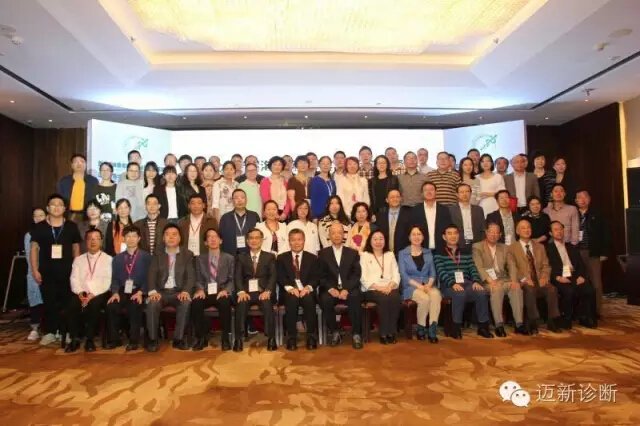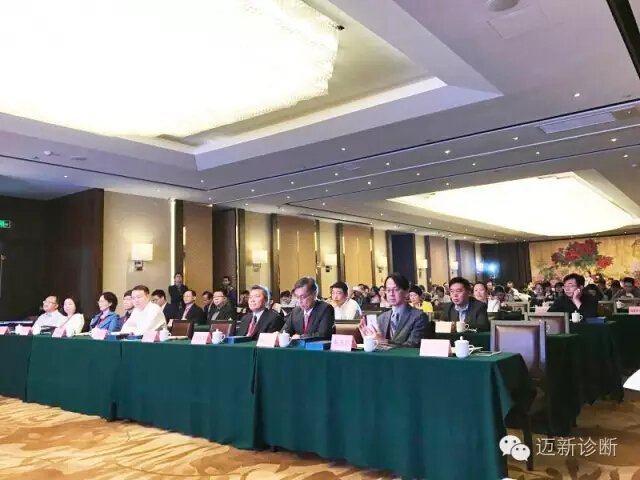
First Cross-Strait Precision Medicine International Summit Held in Fuzhou

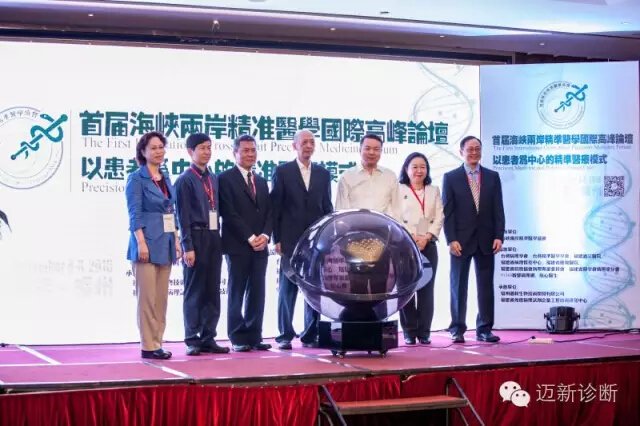
On November 5th and 6th, the ‘First Cross-Strait International Summit on Precision Medicine’ was successfully held in Fuzhou, with the Cross-Strait Precision Medicine Association established concurrently. The two-day forum brought together experts and scholars in precision medicine from across the strait and three regions. Centered on the theme ‘Patient-Centered Precision Healthcare Models,’ keynote speeches were delivered from multiple perspectives including government, healthcare professionals, medical enterprises, industry associations, and social organizations. The forum particularly focused on sharing experiences and advancements in precision medicine for major diseases such as lung cancer, breast cancer, cervical cancer, and prostate cancer, which are key areas under China’s ’13th Five-Year Plan’ national strategic initiative ‘Precision Medicine Research.’
Currently, the most reliable, reproducible, and accurate diagnostic method recognized by the medical community is pathological diagnosis. Pathological diagnosis not only determines the benign or malignant nature, classification, and grading of tumors, providing the final diagnosis of a disease, but also guides clinicians in prognosis assessment and drug selection, offering crucial evidence for patient treatment. The direction of modern medical development is precision medicine, and precise pathological diagnosis is the foundation for achieving precision medicine. The combination of precise pathological diagnosis and precise treatment constitutes the core of precision medicine.
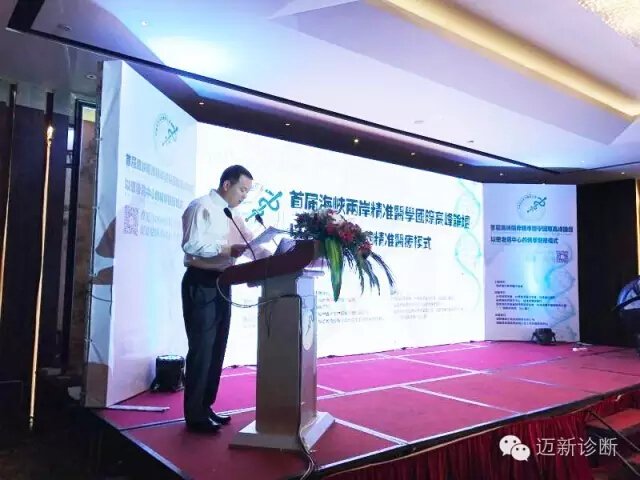
Chen Xiaochun, Deputy Director of the Fujian Provincial Health and Family Planning Commission, stated that precision medicine represents an innovation in medical concepts and models, which will promote and drive the development of the health industry. Fujian and Taiwan share deep historical ties, and it is hoped that the medical communities of Fujian and Taiwan will take the lead in piloting initiatives, further strengthening exchanges, and jointly enhancing the medical technology levels across the strait. Wang Xiaoya, Chairman of the Cross-Strait Precision Medicine Association, proposed in the opening speech that China’s precision medicine is not equivalent to that of the United States. Instead, it takes the development of precision medicine as an opportunity, based on the localization of pharmaceutical products, standardization of diagnosis and treatment, coordination of medical services, and individualization of health services, aiming to reduce diagnosis and treatment costs, improve diagnosis and treatment technology levels, optimize medical service models, address healthcare challenges, accelerate the cultivation of the big health industry, and drive comprehensive economic growth.
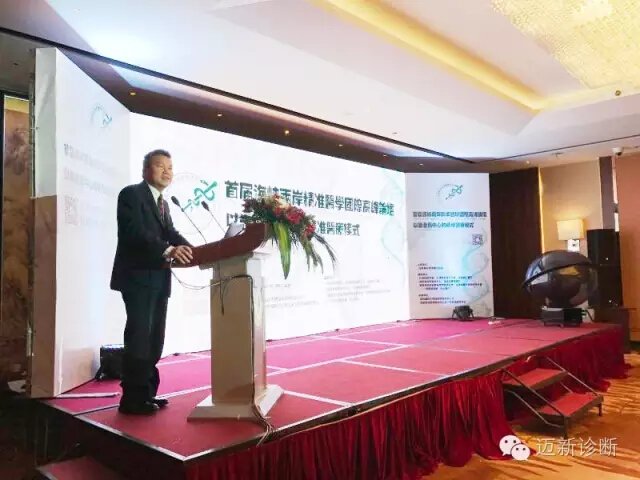
What experiences can be shared and exchanged between the two sides of the strait regarding the development of precision medicine?
Professor Zhou Deying, Chairman of the Taiwan Society of Pathology, introduced that precision medicine in Taiwan is also in its early stages. He hopes to strengthen cross-strait exchanges in the multidisciplinary fields involved in precision medicine, such as pathology, laboratory medicine, imaging, radiotherapy, endoscopy, and pharmacology, through the platform of the Cross-Strait Precision Medicine Association. He also expressed a desire to share Taiwan’s experiences in areas like National Health Insurance, palliative care, and hospice care with relevant professionals on the mainland. ‘The precision medicine market has vast potential,’ said Professor Wang Zihao of the Taiwan Precision Medicine Association. He noted that both sides of the strait have their respective advantages and should join hands to explore the global market. Professor Qiao Youlin, a member of the World Health Organization (WHO) Cancer Expert Group and from the Cancer Hospital of the Chinese Academy of Medical Sciences, emphasized that non-communicable diseases have become the world’s leading cause of death, primarily due to air pollution, tobacco and alcohol use, unhealthy diets, and poor lifestyles. Precision medicine, with its precise prevention and prediction capabilities, can help more people avoid the threat of death and reduce the waste of social and medical resources. This requires governments to comprehensively assess the trade-offs between economic development and health, as well as the joint efforts of medical institutions, social organizations, public welfare organizations, charitable institutions, volunteer teams, and enterprises.
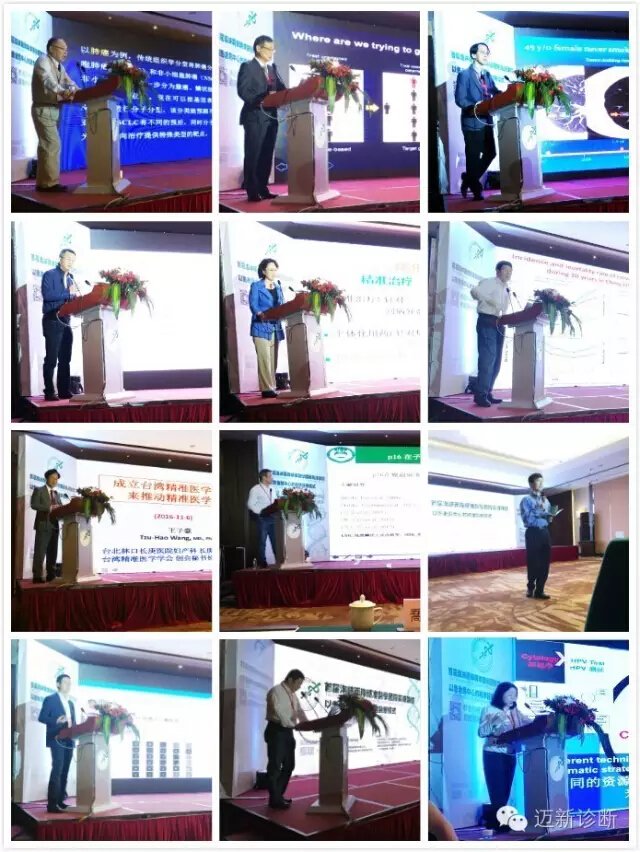
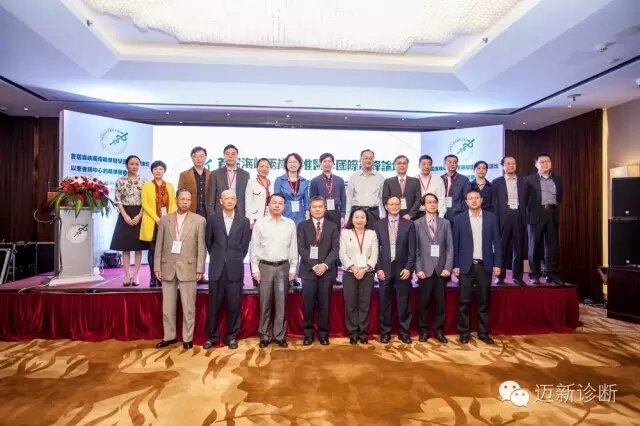
This forum marks a milestone as the first cross-strait conference themed on ‘Precision Medicine.’ It brought together experts and scholars including Professor Zhou Deying, Professor Cai Junming, and Professor Wu Yucong from Taipei Veterans General Hospital; Professor Wang Zihao from Linkou Chang Gung Memorial Hospital in Taipei; Professor Zhang Yaxian from the Department of Pathology at the University of Hong Kong; Professor Yang Bin from the Cleveland Clinic in the United States; Professor Zhou Xiaoge from Beijing Friendship Hospital; Professor Zhu Xiongzeng from Fudan University Shanghai Cancer Center; Professor Fu Li from Tianjin Medical University Cancer Institute & Hospital; Professor Liu Yixin from Tianjin Central Hospital of Gynecology and Obstetrics; Professor Qiao Youlin and Professor Chen Wen from the Cancer Hospital of the Chinese Academy of Medical Sciences; Professor Ru Kun from the Institute of Hematology & Blood Diseases Hospital, Chinese Academy of Medical Sciences; Professor Wu Song from Luohu Hospital affiliated with Shenzhen University; Professor Chen Xiaoyan and Professor Chen Xin from Fujian Provincial Hospital and the Fujian Provincial Pathology Quality Control Center; Professor Yu Yinghao and Professor Qu Lijuan from Fuzhou General Hospital of the PLA; Professor Zheng Xiongwei from Fujian Cancer Hospital; Professor Zhang Sheng from Fujian Medical University Union Hospital; and Professor Geng Jianxiang from the Third Affiliated Hospital of Nanjing University of Chinese Medicine. The forum focused on sharing experiences and discussions on the advancements in precision medicine for major diseases such as lung cancer, lymphoma, breast cancer, HPV-related cervical cancer, and prostate cancer. It holds positive significance for promoting the development of cross-strait precision medicine, advancing scientific and technological progress for a Healthy China, strengthening cross-strait medical academic exchanges, integrating cross-strait medical industry resources, promoting the development of cross-strait medical undertakings, and enhancing the overall medical technology levels across the strait.